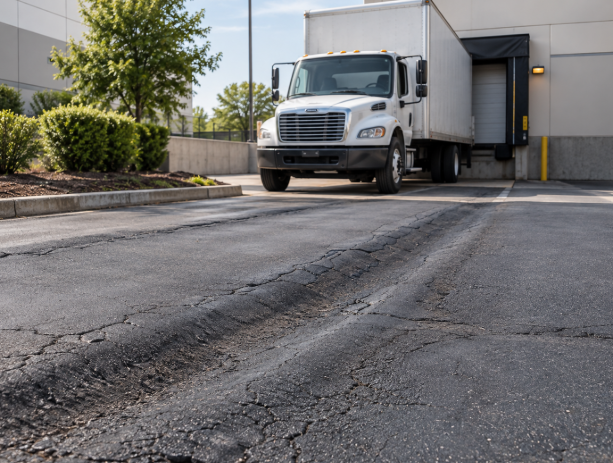
If water keeps collecting in the same part of your parking lot after it rains, there’s usually a reason. Parking lot drainage problems often come back to improper slope, a low spot in the pavement, settlement, blocked drainage, or deterioration below the asphalt. A puddle doesn’t automatically mean the entire lot needs replacement, but recurring standing water is worth investigating before the pavement around it starts failing.
At Atlanta Paving Solutions, we see drainage as part of the pavement system rather than a separate issue. How the surface slopes, where the water travels, and what’s happening underneath the asphalt all matter when figuring out why one section stays wet long after the rest of the property has dried.
What Causes Parking Lot Drainage Problems After Rain?
A parking lot should direct runoff away from the driving surface and toward an appropriate drainage point. Water starts collecting when something interrupts that path.
Sometimes the issue dates back to how the lot was graded. Other times, a parking lot that drained well for years begins holding water because the pavement or base has changed.
Here are some of the common causes we look for.
The pavement has a low spot
Water follows elevation. Even a relatively shallow depression can create a puddle if the surrounding pavement sits slightly higher.
Low spots can exist from the original paving work, but they can also develop later as pavement settles. Areas exposed to repeated truck traffic, dumpster service, delivery vehicles, or concentrated turning movements often experience more stress than the rest of the lot.
If the asphalt remains solid and the problem stays confined to one depression, the repair may be much more localized than the size of the puddle makes it look.
The lot no longer has the right slope
Parking lots need enough slope to move water instead of letting it sit.
Over time, repairs, overlays, patches, curb work, or settlement can change the surface profile. A section that once directed runoff toward an inlet may eventually send it toward a new low point.
That’s one reason simply covering a problem area with additional asphalt isn’t always the right answer. Raising one section without considering the surrounding elevations can move the puddle rather than eliminate it.
The Georgia Department of Transportation Drainage Design Policy Manual dedicates an entire chapter to pavement drainage, including surface flow, pavement grades, inlets, and drainage at low points. Commercial parking lots aren’t state highways, but the same basic principle applies: water needs a clear route off the paved surface.
Pavement or the base underneath has settled
A depression sometimes points to a problem deeper than the asphalt.
The pavement surface depends on the material underneath it for support. If that base becomes unstable, the asphalt above can sink, crack, or deform. Water then collects in the depressed area, and that moisture can continue working into existing cracks and failed pavement.
This matters in Metro Atlanta, where soil and drainage conditions deserve attention during pavement work. Our asphalt paving and repair process includes base preparation and grading because a smooth new surface won’t perform well if the underlying structure or drainage is wrong.
Look closely at the pavement around the puddle. Sinking, cracking, rutting, crumbling edges, or repeated potholes suggest that the problem may extend below the surface.
Water has nowhere to go
Sometimes the pavement is sending water in the right direction, but the drainage path itself isn’t working properly.
Leaves, sediment, trash, or other debris around an inlet can slow runoff. Curbs and pavement transitions can also interfere with flow if water reaches a low point without a clear outlet.
Pay attention to where the puddle starts. Water concentrated beside a drainage inlet tells a different story than a large puddle sitting in the middle of an otherwise open section of pavement.
Runoff patterns around the property have changed
The parking lot isn’t the only surface contributing water.
Roof drainage, landscaped areas, neighboring pavement, sidewalks, drive lanes, and other hard surfaces all influence where stormwater travels. Changes elsewhere on a property can send more water toward one part of the lot than it handled before.
If puddling seems relatively new but the asphalt hasn’t obviously changed, it’s worth looking beyond the edges of the puddle.
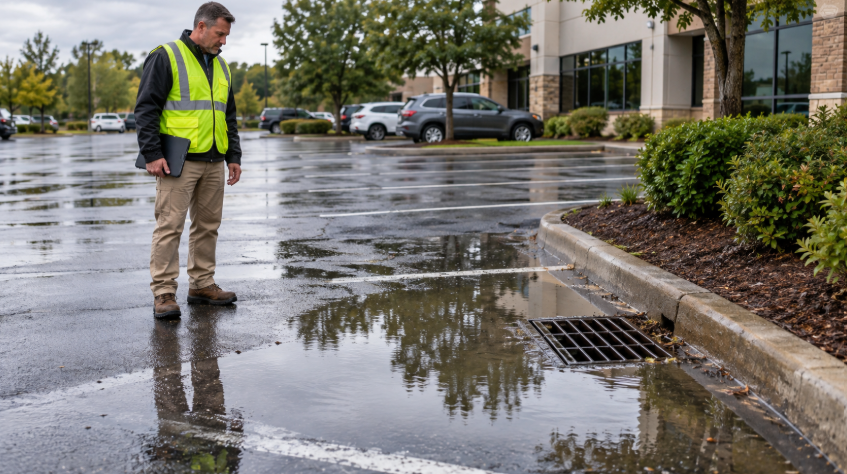
Is Standing Water Always a Sign of Pavement Failure?
No. A parking lot can hold some water briefly during and immediately after heavy rain without having a structural problem.
The pattern matters more.
If one area regularly remains underwater while the surrounding pavement dries, that indicates a drainage or elevation issue worth checking. A puddle that appears in exactly the same place after every storm is also more informative than scattered surface water during a major downpour.
Condition matters too. Solid pavement with no cracking or settlement may point toward a surface drainage problem. Depressed asphalt surrounded by cracks, potholes, or failed previous repairs raises more concern about the base.
Our parking lot repair and maintenance service addresses both visible surface damage and the conditions underneath it. Before deciding how to repair a wet area, we look at why the water is collecting there.
Why Standing Water Becomes a Bigger Asphalt Problem
The puddle itself is only part of the concern.
Asphalt naturally develops cracks as it ages. Once water reaches those openings, it can travel below the surface and into the supporting base. If the material underneath loses stability, traffic continues pressing down on a surface that no longer has consistent support.
That’s where you start seeing sinking pavement, potholes, widening cracks, or repairs that fail again in the same location.
Standing water can also create practical problems before structural damage becomes obvious. Customers and tenants may have to walk through puddles. Vehicles splash water onto nearby sidewalks or entrances. Parking stalls can become inconvenient to use after storms.
Those annoyances are useful warning signs. They show exactly where the lot is struggling to move water.
What Type of Repair Does a Drainage Problem Need?
The repair depends on the cause.
For a localized low spot where the surrounding pavement and base remain stable, correcting the profile of that section may restore drainage. Failed asphalt may require removal, base work, compaction, and replacement rather than another surface patch.
Larger areas with widespread surface deterioration may point toward resurfacing, but only if the supporting structure underneath remains sound. If the pavement is sinking or the base has failed, covering it with a new surface won’t correct the underlying problem.
Concrete also matters around many commercial lots. Curbs, aprons, sidewalks, and other concrete areas affect how water moves across a property. Atlanta Paving Solutions handles both asphalt and concrete paving and repair services, which lets us look at the transitions between those surfaces rather than treating each material in isolation.
There isn’t one drainage repair that fits every puddle. The surface profile, condition of the asphalt, base stability, and route the water takes all need to make sense together.
Check Your Parking Lot During or Right After a Storm
One of the best times to inspect a drainage problem is while the evidence is still visible.
Take photos of the wet areas before they dry. Note whether the same puddles appear during every storm and watch where water enters and leaves the area.
Look for cracking around the edges, pavement that feels depressed compared with adjacent sections, recurring potholes, and places where runoff seems to stop unexpectedly.
It also helps to note whether the problem affects an entrance, pedestrian route, parking stall, loading area, or another high-traffic section of the property. Those details give a paving contractor a much clearer picture than a dry parking lot several days later.
Metro Atlanta Parking Lots Need Drainage and Pavement to Work Together
Water is especially important to consider when evaluating pavement in Metro Atlanta. The area’s soil conditions can hold moisture beneath pavement if drainage and base preparation aren’t handled correctly.
That’s why we look below the obvious surface problem.
A puddle may need a relatively small correction. Another one may be showing you that a section of pavement has settled or the supporting material underneath has begun to fail. Finding that distinction early gives you more repair options.
If your parking lot keeps holding water in the same places after rain, contact Atlanta Paving Solutions to have the area evaluated. We handle asphalt repair, resurfacing, concrete work, and parking lot maintenance throughout Metro Atlanta. We’ll look at how the area drains, what condition the pavement is in, and what actually needs to be corrected before recommending a scope of work.