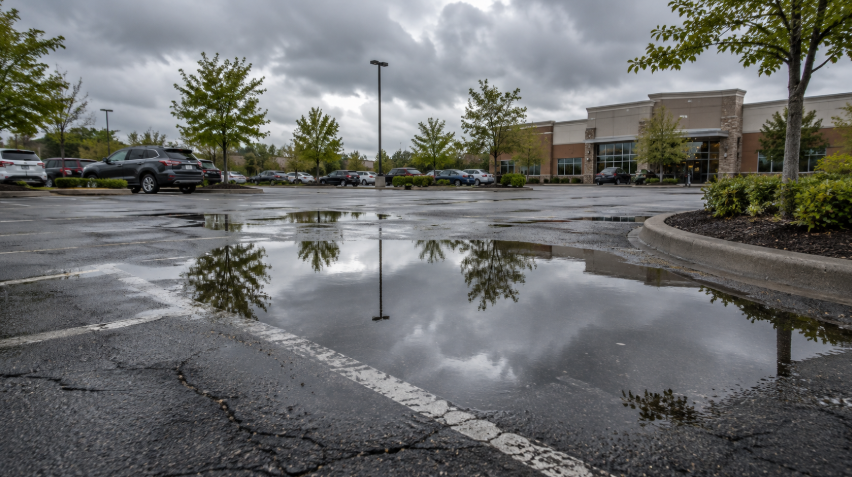
If your parking lot is sinking in one area, the asphalt itself usually isn’t the whole problem. A depression often means the material supporting the pavement has shifted, softened, compacted, or lost strength. Heavy vehicle traffic can create another type of sinking called rutting. Before repairing the surface, you need to know which kind of failure you’re looking at.
At Atlanta Paving Solutions, we evaluate the pavement and the conditions beneath it before recommending a repair. A sunken section near a loading area may have a different cause than a broad depression beside a storm drain or a pair of narrow ruts running through a drive lane.
What Causes a Parking Lot to Sink?
Asphalt relies on the layers underneath it for support. The finished pavement surface distributes vehicle weight, but the base and subgrade still carry that load.
Once those supporting layers move or weaken, the asphalt follows them.
That movement may happen gradually. Property owners sometimes notice it first because rain starts collecting in an area that used to drain correctly. Other sections develop cracks around the edge of a depression, while some begin to form visible wheel paths.
The location and shape of the sinking usually provide useful clues.
A Weak or Failing Base Beneath the Asphalt
One of the bigger concerns with sunken asphalt is failure below the pavement surface.
A parking lot typically includes compacted supporting material beneath the asphalt. If that material loses stability, vehicles continue pressing down on a pavement system that no longer has uniform support.
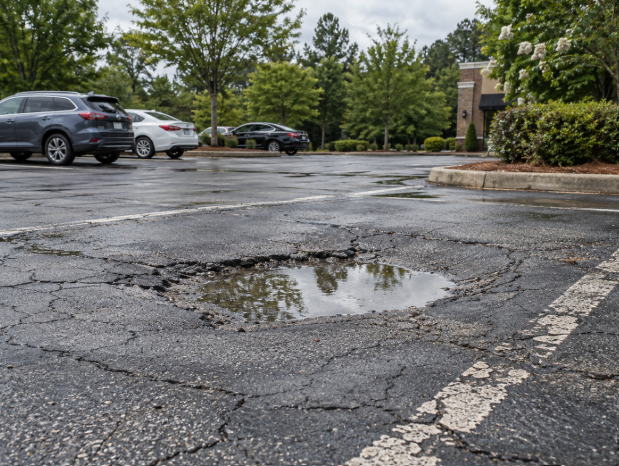
The result can look like a bowl-shaped depression, a cracked section that sits lower than the surrounding pavement, or an area that has already been patched several times but keeps failing.
Water often contributes to this type of problem. Once moisture reaches the supporting layers, some materials lose strength. Traffic then accelerates the deformation.
The Federal Highway Administration discusses this relationship in its guidance on geotechnical pavement performance, noting that excessive moisture, poor drainage, settlement, and deformation of underlying pavement layers can contribute to pavement distress.
A new layer of asphalt over an unstable base won’t restore that lost support. The failed material may need to come out before crews rebuild and compact the area.
Our parking lot repair and maintenance services include evaluating whether visible pavement damage comes from the surface or from a deeper failure.
Water Has Reached the Base
Water doesn’t have to sit on top of a parking lot to create damage underneath it.
Cracks, failed seams, pavement edges, and deteriorated areas give moisture a route beneath the asphalt. Once water reaches the supporting material, repeated traffic can make a weak area worse.
This is especially relevant around a depression because sinking changes how water moves across the surface. A low area starts collecting runoff. If the pavement already has cracks, that water has more opportunity to work its way below the surface.
That creates a cycle. The base weakens, the pavement settles farther, and the deeper depression catches even more water.
Our recent article on parking lot drainage problems after rain covers standing water and surface drainage in greater detail. If the pavement itself is dropping, though, the evaluation needs to go beyond where the water flows and determine whether the structure underneath has changed.
Heavy Trucks Can Create Ruts and Depressions
Not every sunken area comes from water.
Repeated heavy loads can deform asphalt and the layers underneath it. This often shows up in predictable places around commercial properties, including loading zones, dumpster approaches, delivery routes, entrances, and turning areas.
Rutting usually follows the wheel paths. Instead of one round or irregular depression, you may see parallel channels where vehicles repeatedly travel.
The width of those ruts matters too. Narrow deformation concentrated near the surface may point toward the asphalt itself. A broader depression can indicate movement deeper in the pavement structure.
That distinction affects the repair.
If crews replace only the surface while the supporting layers continue to deform, the same wheel paths may return. Our asphalt paving and repair work starts with evaluating the existing pavement, base condition, traffic patterns, and drainage before determining whether repair, resurfacing, or replacement makes sense.
Poor Compaction Can Show Up Later
A parking lot may look fine after installation and still develop settlement later.
The soil and aggregate beneath asphalt need consistent compaction. If one section contains loose material, improperly prepared fill, or an area that received different preparation than the surrounding lot, it may compress further under traffic.
That creates differential settlement, meaning one area drops while nearby pavement stays at roughly the same elevation.
Utility work can create similar conditions. A trench that crosses a parking lot gets excavated, filled, and repaved. If the backfilled material later settles, the outline of the trench may become visible at the surface.
This type of sinking often has a recognizable shape rather than appearing randomly across the lot.
Leaking Utilities Can Wash Out Support
A depression that appears relatively quickly deserves attention, especially if it develops near underground utilities.
Broken or leaking water lines and drainage pipes can affect the soil or base beneath pavement. In some situations, moving water carries fine material away and leaves less support under the asphalt.
The surface may sag, crack, or eventually collapse into the weakened area.
A paving contractor can evaluate the pavement condition, but a suspected utility problem may require the appropriate utility or plumbing professional before pavement repairs begin. Replacing asphalt without addressing an active leak would leave the cause in place.
Tree Roots and Soil Movement Can Change Pavement Elevations
Trees usually get attention for lifting pavement, but root systems and changing soil conditions can contribute to uneven pavement in other ways too.
Roots affect the soil around them. Soil moisture also changes over time, and some areas settle differently as site conditions change.
The pattern here may look less like traditional wheel-path rutting and more like a broader change in elevation near landscaped islands, mature trees, edges of the lot, or transitions between pavement and other surfaces.
Nearby concrete can offer another clue. If curbs, sidewalks, or other concrete sections have shifted along with the asphalt, the issue may extend beyond the pavement surface.
How to Tell Rutting From a Sunken Section
Take a look at the shape before assuming every low spot has the same cause.
Long depressions that closely follow tire paths usually suggest rutting associated with repeated traffic loads or pavement deformation.
A localized bowl or irregular low section may point toward settlement or base failure.
Cracks around the outside of a depression suggest movement. Recurring potholes or patches in the same area raise similar concerns.
If the problem appeared after utility work, construction, a plumbing repair, or another excavation, settlement in the disturbed area belongs high on the list of possibilities.
Water sitting in the depression tells you the elevation has changed, but it doesn’t tell you why.
Does Sunken Asphalt Need to Be Replaced?
Sometimes only the failed section needs replacement.
A localized repair may involve removing damaged asphalt, correcting the unstable material underneath, compacting the base, and installing new asphalt at the proper elevation.
Other lots have broader problems.
If settlement appears throughout the property, repairs keep failing, or the pavement shows widespread structural deterioration, a larger restoration may make more sense. Resurfacing remains an option where the underlying pavement structure stays sound, but an overlay doesn’t correct a failing base.
That’s why diagnosis matters before choosing the repair method.
Covering a depression because it looks low may temporarily improve the surface while leaving the original failure untouched. It can also change the surrounding grades and create a new drainage problem nearby.
Watch a Sinking Area Before It Gets Worse
You don’t need to measure every slight variation in an older parking lot. Pavement changes over time.
Pay closer attention when the depression is growing, cracks are spreading around it, vehicles noticeably dip when crossing it, water suddenly starts collecting there, or previous repairs keep failing.
Those patterns suggest movement rather than ordinary surface wear.
Photos also make progression easier to track. Take a picture from the same location every few months or after major rain events. Include nearby curbs, striping, drains, or other fixed features so you have a useful visual reference.
Have a Sinking Atlanta Parking Lot Evaluated Before Repaving It
A sunken parking lot section tells you that something has changed, but the surface alone doesn’t always reveal what.
The cause might sit in the asphalt, the base, the soil below it, a heavily traveled wheel path, or a disturbed area around underground work. Finding that cause first gives you a much better basis for deciding whether the area needs a localized repair or more extensive pavement work.
If you have sinking asphalt on a commercial property in Metro Atlanta, contact Atlanta Paving Solutions to schedule an evaluation. We’ll look at the pavement condition, traffic pattern, drainage, and supporting structure before recommending the appropriate repair.