Yes, asphalt driveway resurfacing can leave the garage threshold at its current height. If the pavement underneath is sound, a contractor can often remove enough existing asphalt near the garage to make room for the new layer. At Atlanta Paving Solutions, we look at how the driveway meets the concrete floor and where water runs before recommending how to resurface that area.
Why the garage matters in asphalt driveway resurfacing
The concrete floor inside your garage gives the contractor a fixed height to work from. If your asphalt already meets the slab and the crew adds a new layer right up to it, the driveway can end up higher than the garage floor. That can leave a noticeable lip, change where rainwater goes, or interfere with how the bottom of the garage door meets the threshold.
On some driveways, there’s already a small step up from the asphalt to the garage. An overlay could reduce that step, depending on the available space and how the driveway slopes. On others, the slab and asphalt are close to level, so the contractor may need to remove some material first. It’s worth looking at the full width of the opening. One side can sit higher than the other, even if the joint looks straight from the street.
How milling makes room for new asphalt
Milling removes a controlled depth of existing asphalt. Near a garage, that gives the contractor room to place and compact new material while keeping the finished surface close to the height the transition needs. Depending on the driveway, the work may involve removing material near the garage or milling a larger section to get a smooth approach.
The Colorado Asphalt Pavement Association’s driveway guide recommends inspecting the existing pavement, repairing weak areas before overlaying, and shaping the finished surface so water doesn’t pond. At a garage, that means working backward from the finished height and drainage path to decide how much asphalt needs to come out.
A quote that says “overlay existing driveway” leaves that detail open. If the driveway already sits close to the slab, ask where the crew plans to remove material and how far that preparation extends back from the garage. A narrow cut might leave room at the joint while still creating a bump a few feet out. The approach matters every time you pull in.
Check where rainwater goes before changing the height
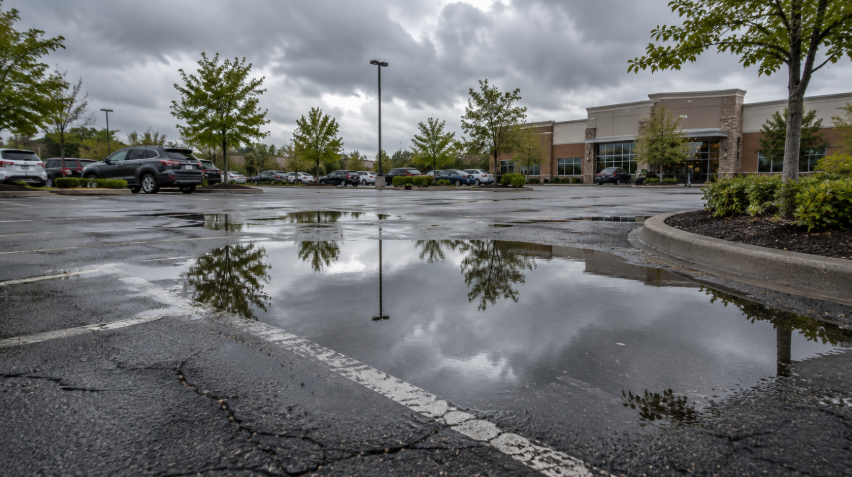
Look at the driveway during or just after a rain. If water runs away from the garage and leaves the pavement at the side, the resurfacing plan should preserve that path. If water already collects along the garage opening, keeping the current height at the joint may leave the underlying drainage problem in place.
A driveway that slopes toward the house needs particular attention. Water may drain to one side, flow into an existing channel drain, or collect at a low point near the door. An extra layer of asphalt can change how water reaches a drain or raise a low edge that currently lets runoff escape.
If you have a drain across the driveway, ask how the finished asphalt will meet the grate. A grate that ends up higher than the pavement around it can leave water sitting alongside it. Photos taken after rain are useful here. A dry driveway can hide a shallow dip or give little indication of how much runoff reaches the garage.
What if the asphalt has sunk next to the garage?
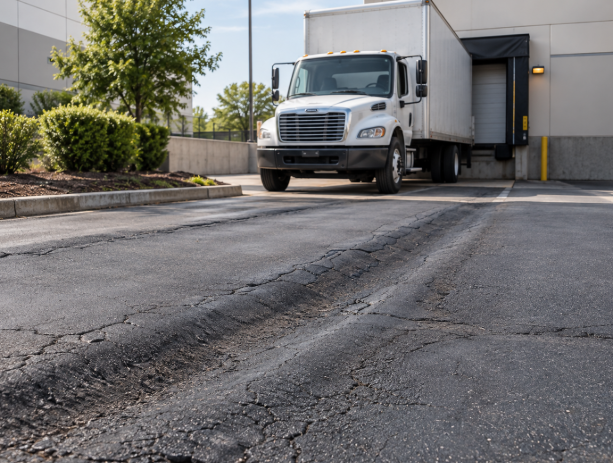
A shallow worn area and a strip of pavement that has settled along the concrete can look similar from a distance. Closer up, settlement may show as a broad dip, a gap along the slab, or a cracked patch that keeps coming back. If the material beneath the asphalt has lost support, filling the dip with a new surface layer leaves that movement unresolved.
When the problem stays confined to the area beside the garage, the contractor may be able to remove and rebuild that section, then resurface the rest of the driveway if it has a sound base. If the concrete slab itself has moved or the asphalt has settled well beyond the opening, the scope can change. Our asphalt paving and repair services include milling, patching, and overlays, so the condition of each section can guide what work belongs in the estimate.
What should the driveway quote say about the garage?
Ask the contractor to describe the finished transition in plain language. Will the asphalt meet the slab at roughly the current height? Where will the crew remove existing material? If the plan changes the slope near the house, where will the water go?
Check whether the quote identifies any repair near the garage and whether that repair is part of the price. If the contractor needs to see what’s under a settled section before confirming the extent of the work, ask how they’ll handle any added work. That gives you a clearer basis for comparing bids that all use the word “resurfacing.”
Access matters if you park in the garage every day. Ask when you’ll need to move your vehicles, where you can park while the work is underway, and when you can drive across the new asphalt. Get that timing for your particular job, especially if you have a single driveway or a delivery scheduled.
Start with the transition you use every day
You can learn a lot by looking at the driveway from inside the garage with the door open. See whether the asphalt meets the slab evenly across the opening and whether either side has dropped. If water reaches the door during a storm, take a wide photo that shows the slope and a closer one that shows where it pools. Mention any scraping you notice when pulling in or backing out.
If you’re considering resurfacing a driveway in Metro Atlanta, request a driveway estimate from our team. Tell us what happens at the garage now, even if the concern seems minor. Before approving a quote, make sure you know where the new asphalt will meet the concrete and where rainwater will go once the work is done.